


Matisse, 1941–1954 at the Grand Palais
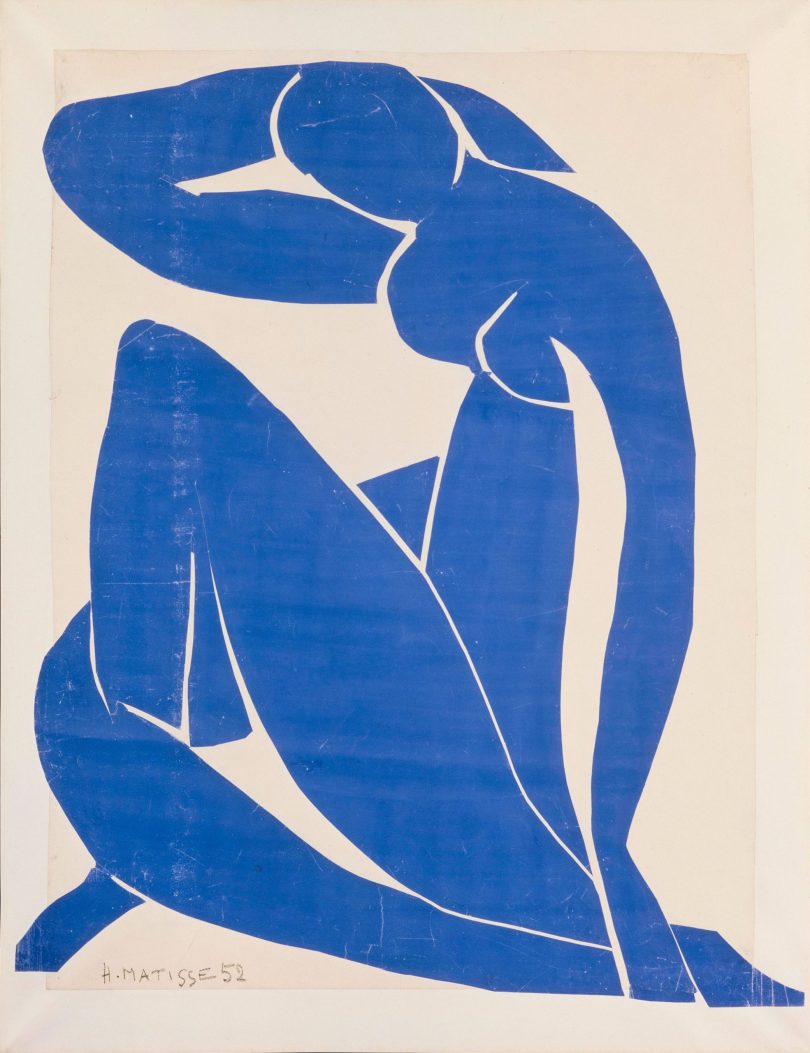
From 24 March to 26 July 2026, the Grand Palais offers a unique insight into the final years of Henri Matisse’s creative output, a period of radical reinvention in which the artist explored the possibilities of colour, form and visual expression right up until the very end.
The exhibition Matisse, 1941–1954 brings together over 300 works – paintings, drawings, illustrated books, textiles, stained-glass windows and cut-out gouaches – offering the public a unique insight into the artistic maturity of an undisputed master of modern art.
The language of cut-out forms: a belated revolution
Between 1941 and 1954, as he approached his eightieth birthday, Matisse embarked on a profound transformation of his art. Constrained by health problems that limited his use of the brush, he devoted himself to a technique that he elevated to the status of an autonomous visual art form: cut-out gouache. Through its simple forms and pure colours, this practice became a true visual language capable of conveying universal emotions whilst retaining a remarkable inventive freshness.
The exhibition highlights this innovative turning point, which does not replace painting but reinvents it: thanks to this technique, colour is no longer content merely to fill a surface; it becomes living matter and structure. Thus, graphic works and cut-out compositions engage in a dialogue within the same space, redefining the place of colour in 20th-century art.
Henri Matisse, Nu bleu II, 1952
Major works and an immersion in Matisse’s studio
The exhibition brings together iconic collections from this creative phase: the Vence Interiors series (1947–1948), the Jazz album and its original sketches, the Themes and Variations series, as well as ink drawings and monumental projects such as the panels for La Gerbe and Les Acanthes. As a highlight, legendary figures such as La Tristesse du roi, Zulma, La Danseuse créole and the famous Nus bleus are brought together exceptionally, bearing witness to the formal and emotional brilliance of these final years of creation.
The exhibition design, conceived as a living reconstruction of Matisse’s studio, invites visitors to immerse themselves fully in the artist’s ‘flourishing garden’. Each room reveals a dialogue between works of varied formats and media, giving visitors the sensation of moving through the very heart of Matisse’s creative process.
This exhibition, the result of a co-production between the Centre Pompidou and the Grand Palais, with the participation of the Musée Matisse Nice, offers a rare opportunity to revisit the late work of one of the greatest artists of the 20th century in all its richness and formal audacity.
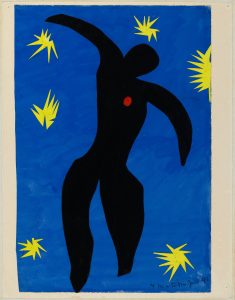
Photo ©Centre Pompidou, MNAM – CCI/Philippe Migeat

