


Meeting with Didier Fusillier, Président of GrandPalaisRmn
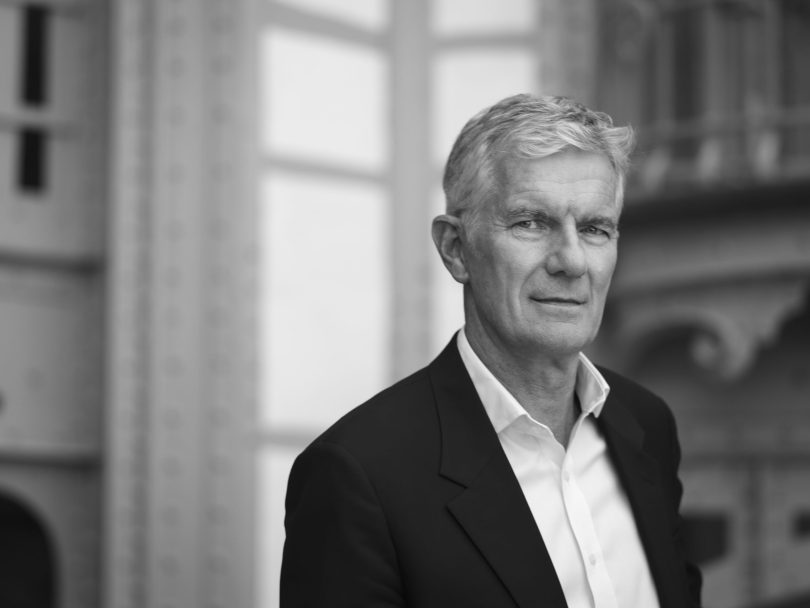
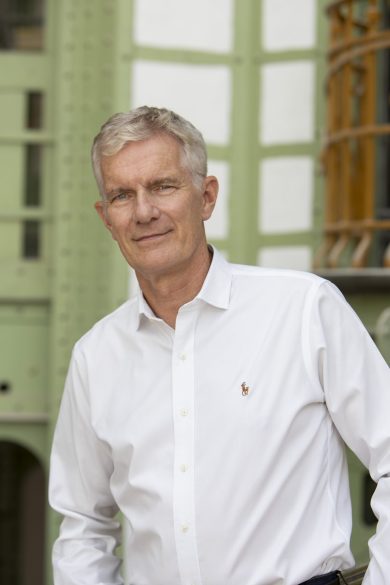
Meeting with Didier Fusillier, Président of GrandPalaisRmn
By Katia Kulawick-Assante
Can you explain what the Réunion des Musées Nationaux (RMN) is and how it is linked to the Grand Palais?
Didier Fusillier –
The Réunion des Musées Nationaux dates back to 1895. All national museums were brought together under this label: recently, the Orsay museum and Versailles became independent, but the label represents 17 major châteaux and museums in France and more than 38 shops, including the Louvre. In 2011, the RMN merged with the Grand Palais, and the group now has nearly 1,000 employees. The entity also includes the Grand Palais-RMN photographic agency, which manages the rights to nearly two million photographs of public monuments. It also manages the production and sale of casts and the Louvre’s chalcography workshop (which sells replicas of old engravings, etchings and prints), created in 1797. This represents a lot of activity outside the Grand Palais.
What has changed at the Grand Palais for its reopening in 2024 for the Olympic Games – and to the public in June 2025?
The Grand Palais has been completely renovated: there had been some minor work, such as on the foundations, but you have to imagine that the entire electrical system and the 2,200 doors dated back to 1900! They were already half closed, but above all, everything had to be brought up to standard. Previously, there were only two lifts in a building as big as the Palace of Versailles! Today, there are 42. Now, people with reduced mobility can also enjoy the space. It was a huge renovation project: nothing luxurious, but bringing the building and public areas up to technical and safety standards. We now have 170 cameras and three security control stations. You have to imagine that before, there was none of that.
Incredible…
Yes, frankly. We opened for the fencing and taekwondo events of the 2024 Olympic Games, which was a bit of a challenge, first with the Nef, then the galleries in June 2025. The section on the Palais de la Découverte side, adjacent to the Grand Palais, will reopen in 2026.
What are the links and how do you work with your historic “neighbours”, the Palais de la Découverte and the Petit Palais?
The Palais de la Découverte, opened in 1938, is located in the west wing of the Grand Palais and is part of Universcience, i.e. the Cité des Sciences et de l’Industrie de la Villette. The Petit Palais was built in 1898 for the Universal Exhibition by architect Charles Girault, who oversaw the construction of the Grand Palais alongside three other architects. The state also entrusted him with the construction of the Petit Palais, which is why there is a sense of symmetry – you can clearly see that both monuments are from the same period. The Petit Palais is managed by the City of Paris. We don’t share the same budget, but we get on very well with Annick Lemoine, the director, and we are increasingly trying to do things together, as we can see that the public moves quite fluidly from one monument to the other.
Who chooses the programme for the Grand Palais?
A dozen or so people internally, including the production team, form the programming committee. We receive a lot of projects from artists, which we study together before deciding what we think is most appropriate for the programme. The idea is to open it up to a very wide audience, as many young people as possible, as many people as possible who feel that it’s not for them – because it’s a major national monument. The Grand Palais belongs to everyone, and we really want to open it up to all audiences. That’s also why we have new, magnificent, free spaces on the exhibition side: you can have a drink, enjoy a pastry, bring your children, sit down in a corner, and no one will ever ask you anything. In the summer, a third of the Nave is accessible free of charge, and it’s a huge success, because many people have never seen the glass roof from inside the monument.
The programme seems to be increasingly eclectic, even opening up to big night-time events…
Yes. From the beginning, the Grand Palais was made for that. In 1854, the Crystal Palace was built in London, which burned down in 1936. So the Grand Palais is the only remaining building in the world from that era. There is no equivalent to such a large glass roof, and that is what makes it unique. Historically, it has hosted major trade fairs, horse shows, and completely crazy events such as the hot air balloon show, the water jet show, etc. In 1900, it was the first time in the world that the public was able to discover the conveyor belt… at the Grand Palais. There was the aeronautical exhibition – before Le Bourget – where the wings of the aeroplanes had to be dismantled to get them into the building, the first cars, etc. It is a monument that has been part of people’s lives. There is still the same spirit that Karl Lagerfeld brought to Chanel when he installed enormous decorations there. There was Monumenta, we created the big festival around Brazil and other major events are in the pipeline. We ended 2025 with a concert by Zaho de Sagazan and the group Air in symphonic version with 8,500 people seated, it was incredible, then we had the 200th anniversary of Le Figaro, the Chanel fashion show… The Grand Palais is constantly on the go, with three major exhibitions at the same time, which has never happened before. We know that we can always come to the Grand Palais, because there will inevitably be something that interests us.
It’s quite new to come and party in a major national monument, isn’t it?
The Grand Palais also attracts people because of its fashion aspect, particularly thanks to Chanel. The place is inspiring, as we can see on Instagram, with the number of photos taken from the Grand Palais, with the Grand Palais in the background, and that’s quite new. It has to be said that having your photo taken in front of the Grand Palais looks amazing. And then, we want to revitalise this part of the Champs-Elysées: with the Dolce & Gabbana exhibition and the ice rink, we were closing at 2 a.m. We have a lot of exhibitions that end at midnight, which means there’s a whole night-owl crowd – as has always been the case on the Champs-Elysées…
Tell us about the history of the Grand Palais.
It was the era of the great world’s fairs at the end of the 19th century, which alternated between London and Paris… Before the Grand Palais, there was a building called the Pavillon de l’Industrie, built for the 1855 World’s Fair. This gives an idea of the country’s wealth at the time. Imagine that the Pavillon de l’Industrie was larger but not really in line with the Pont Alexandre III, which was inaugurated in 1900. So it was decided to dismantle the pavilion and rebuild the Grand Palais in cut stone… this time in line with the bridge! There were no cranes at the time, and yet it was built in just three years, between 1897 and 1900. Today, we want to preserve the joyful, limitless spirit that prevailed at that time. During the First World War, the Grand Palais became a military hospital, treating the wounded who came from the front, then it was set on fire during the Liberation of Paris at the end of the Second World War. It is a monument that has lived through the entire history of the 20th century, right up to the last Olympic Games, when we saw that both the public and the athletes were very enthusiastic about returning to the Grand Palais.
Its location is also strategic in Paris…
It is right at the junction of two huge straight lines that both lead to palaces, in line with the Louvre and Les Invalides… Everyone believes that Les Invalides dates from the same period, but it was Louis XIV who ordered its construction in 1677 and the Louvre, Philippe Auguste in the 12th century. These are extremely important pieces of history for the French nation. The Grand Palais is an incredible 72,000 m² building at the foot of the Champs-Elysées, and it has become a symbol of permanent modernity. Compared to the Louvre, which has its collections, the Grand Palais is an empty shell: so with each event, we bring in the news of the moment.
What did you discover about the Palais during its renovation?
Thanks to François Chatillon, the formidable chief architect of historic monuments, we found a kind of duck-egg blue on the stairs during the renovation work, after removing all the layers of paint. In fact, all the period photos of the monument were in black and white, so we had no idea what its original colour was! And as the building took three years to construct, we had no memory of the colour at the time, but we found this reseda green and the bronze of the staircase, both of which are magnificent. We found the marble, and its origins in quarries in Italy and the Pyrenees, this grey-green-yellow marble that can also be found in the Hall of Mirrors at the Palace of Versailles. So today, when you come to the Grand Palais, you find exactly the same colours as in 1900, and that adds a touch of magic to the place. The balustrades are such a special shade of green that when the sun goes down, they almost disappear, giving the impression that there are no railings at all…
Tell us about the architectural heritage of the Grand Palais, which is a listed historical monument…
In fact, there are several styles at the Grand Palais: a Rococo style at the Palais d’Antin (on the Palais de la Découverte side), which everyone loves; there is a neo-industrial style and there is this glass roof, which is really very special. You have to imagine that it was built 25 years after the Eiffel Tower, but already, they weren’t building like they used to, i.e. with bolts. The difference – and this is why the Grand Palais was built in only three years – is the stamped rivets, which were very modern at the time, because they could be assembled like Lego. It’s worth noting that the glass roof of the Grand Palais weighs more than the Eiffel Tower!
The Grand Palais welcomes new restaurants…
The Grand Café lives up to its name and is always busy. It is a beautiful place, renovated by Joseph Dirand with Italian marble. The food is good, the menu is great if you want to have a drink, it is open almost all the time and there is a great atmosphere. There is a second, less visible venue, the Réséda Café, with a menu by Thierry Marx. It is a little less expensive than the Grand Café, with a restaurant area and a self-service area. It is very friendly and the food is also very good.
How does the Grand Palais adapt to environmental and sustainability issues both in its operations and during its events?
The Grand Palais is connected to the Air de Paris network. There is no air conditioning, not really any heating, but a kind of temperature control system that keeps the temperature at an acceptable level. It’s a floor cooling system, thanks to kilometres of water pipes that heat the atmosphere. Of course, during trade fairs and exhibitions, we take great care to recycle all materials as much as possible.
What are the challenges facing the Grand Palais now?
Finding the right rhythm. The Grand Palais in summer, the ice rink in winter, fairs such as Art Basel and the Saut Hermès are major events that punctuate the year. Around these, we bring a kind of overall fantasy to the building with exhibitions, shows, parties…
You are a man of the theatre: what, for you, is the theatrical dimension of the Grand Palais?
The first theatre show at the Grand Palais was more like cabaret, with choreographer François Chaignaud, at the close of the Festival d’Automne. Mohamed el Khatib was there last summer. The director of the Avignon Festival, Tiago Rodriguez, will be there with a real theatre show from 18 to 21 June 2026. We already have projects with the Paris Opera, we are working with the Opéra-Comique, on all forms, even hybrid forms of theatre, which interest us greatly. The Grand Palais is also a fantastic venue for dance, because our aim is for the building to be our stage setting, without any artifice…

