


Interview with Clara de Pirey, head of the luxury division at the Nelly Rodi agency
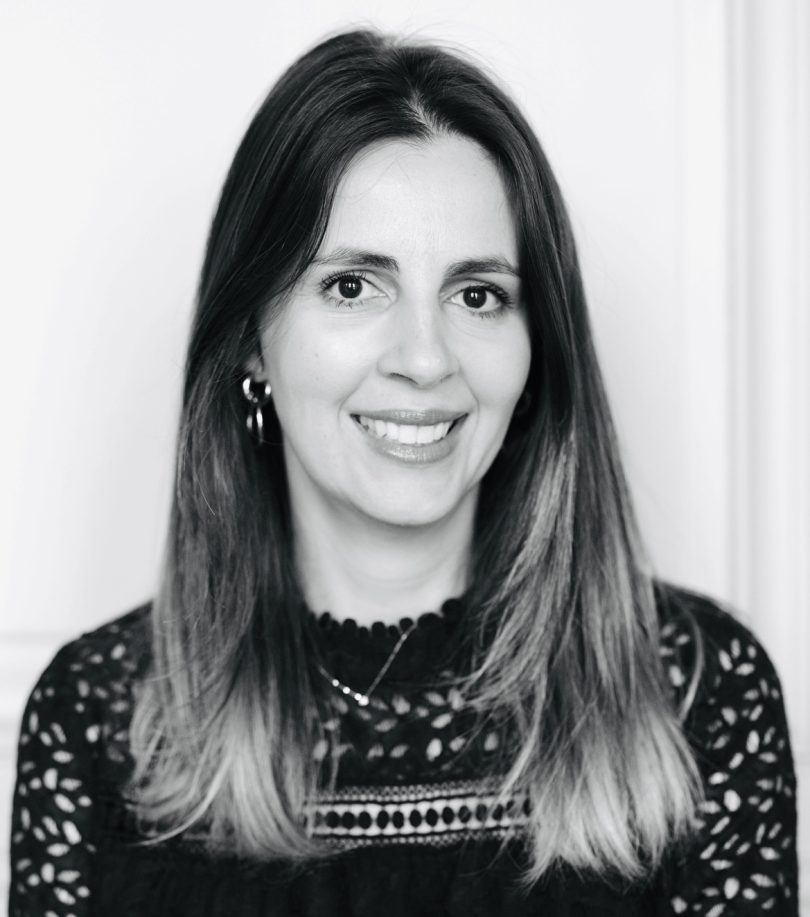
By Katia Kulawick-Assante
What is your role at Nelly Rodi?
I have been heading up the luxury division since 2022. I spent over 13 years at LVMH, notably at Louis Vuitton, where I was involved in strategic project management and consultancy, gaining insights, and analysing performance and data within the finance department, and subsequently the marketing department, working alongside Delphine Arnault. Nelly Rodi was keen to expand into the luxury sector and, when I joined, we set up this department with the ambition – and the desire – to take a cross-cutting approach to the art of living, from fashion and accessories to jewellery and watchmaking, the hospitality sector, wine and spirits, private banking, culture, gastronomy, beauty, entertainment, and so on. We work with the leading French luxury groups, from Italian fashion brands to Swiss watchmakers.
What does the Nelly Rodi agency do?
It has been in existence for 40 years and covers the heart of the creative industries at large. There are three main departments within the agency: Business, which supports brands with their strategic challenges; an Insights department, which focuses on understanding consumer expectations amidst all societal changes and shifts in paradigms; and a Creative department, which develops strategies with a particular emphasis on aesthetics. Our value proposition is unique in the consultancy market. Historically, our core business has been trend reports, which still form part of our offering, although we have diversified significantly. Today, over 75 per cent of our business consists of bespoke consultancy. The majority of our consultancy work involves brand strategy. This may involve providing inspiration, addressing a specific issue within a particular industry or luxury segment, developing cultural frameworks to establish new teams, and defining brand strategy: what the brand wants to communicate, how to link this to its history, its DNA, its ambition, and the mission it wishes to champion. We work on the customer experience and, based on research, explain how to engage with communities and how to foster them. In the luxury department, we also have expertise in VICs (Very Important Customers): although they make up only 2 per cent of the luxury clientele, they account for 40 to 50 per cent of spending, so luxury houses devote a great deal of energy to understanding them properly because they are in extremely high demand. We work with marketing, retail and communications departments, as well as CEOs and senior management. Is a luxury brand planning to open a restaurant? We’ll analyse key trends and draw up a draft proposal and concept as an example. The agency will set about understanding the clientele of the future for a very high-end watch brand, for instance. We also organise several events each year at our private mansion in the 9th arrondissement.
When do these events take place?
We publish five to six new in-depth studies each year on key topics. These represent, in a sense, the essence of all our discussions throughout the year – without any confidential information – thanks to the agency’s diverse range of expertise and profiles. We address both current and future topics, as our role is to anticipate the future. We carry out qualitative research, and I interview numerous VICs directly, using an exclusive methodology, which allows us to gain insight into their expectations. This year, I’ve spoken a great deal about intangible luxury: we’re seeing a real shift towards the experience, so we’ll be explaining what this means for brands. We’re preparing a study on Generation Alpha – those under 18 – to gain a sociological understanding of who they are and what they expect. Another study focuses on the latest transformations in retail, whilst a new study examines the beauty sector, and so on. These public presentations take the form of paid conferences – either on a per-event basis or via a membership scheme that grants access to all conferences throughout the year. This can serve as a brand’s initial introduction to the agency, prior to undertaking bespoke work.
What radical changes is the luxury sector calling for today?
There are many. In fashion, there has been a flurry of creative directors over the past few months who are putting French creativity back in the spotlight. There is a buzz around Paris Fashion Weeks, which have regained a sense of enthusiasm and a breath of fresh air – a welcome development given the challenging climate currently facing the luxury sector. Brands are turning even more towards ultra-luxury: promises must be flawless in their execution, products and services. Having lost a great many customers and turnover, the luxury sector is returning to a cycle of normalisation, but consumers’ expectations are becoming ever higher…
What are the reasons behind the crisis in the luxury sector?
A loss of bearings, price rises that are not necessarily justified or justifiable, a loss of creativity too, a lack of differentiation between brands, material – and almost cognitive – saturation, a growing weariness with the sheer volume of drops, collaborations and visibility, a return to desires within small circles, a desire to share the same values, and to belong to a community that understands you. We are therefore witnessing a shift of certain material expenditures towards the intangible. It is clear that experiential spending continues to grow: treating oneself, creating memories, moments that involve others – such as gastronomy, hospitality and travel. People want to take their time, switch off, focus on their wellbeing; all of these shifts in spending have affected the fashion and products sectors.
Isn’t the intangible harder for a brand to sell?
Luxury brands are taking an increasing interest in this, though it is not necessarily more complex to manage: the challenge lies in the overall orchestration. It is about elevating the customer relationship through the art of hospitality and carefully curating the entire customer journey. The experience goes beyond a mere material transaction. The emphasis is on emotion and memorability. Although this intangible dimension is harder to measure, it is precisely what makes the difference and enables a brand to stand out from the competition in the long term.
What must a luxury brand understand in order to succeed today?
That there is no longer any room for opportunistic or short-term thinking. We must focus on the long term with authenticity and avoid communicating on aspects that cannot be proven or traced. All aspects of responsibility are crucial: ethical and human values, and respect for the environment – now more than ever, as we are in the midst of a climate crisis – which may have seemed a distant concern to some until now, but is now part of everyday life. Being beyond reproach is what makes the difference.
What are the major trends at the moment?
Certain trends cut across almost all areas of expertise; these are known as ‘megatrends’, which are long-term in nature – lasting five years or more. They respond to aspirations and major societal changes, because each individual sometimes weighs up their life, their consumer choices and their convictions against broader societal movements. We are seeing, for example, a real need for a sense of belonging – or a renewed sense of belonging – stability and the passing on of traditions: brands are creating ‘foundations’; they feel the need to establish themselves as ‘institutions’, to possess that authority derived from expertise and embodied experiences, with a local focus within specific regions and communities, and with a strong sense of commitment. We live in a world of accelerating technological change where everything is sometimes done remotely; so being rooted provides reassurance. We seek a break from the digital world, places with a soul, something extra, often through a physical presence – a shop, a museum – anything that embodies a membership, a sense of community. Conversely, this trend coexists perfectly with the quest for exhilaration: In an anxiety-inducing world, we have a visceral need to explore, experiment and have intense experiences. Faced with the pressure to perform, global conflicts and digital hyperstimulation, disconnecting paradoxically involves heightened sensory stimulation: immersive, fleeting, curious moments, dictated by freedom of mind and action. To respond to this quest for intensity, brands dramatise the experience and offer a moment where time stands still.
Does this also reflect a need for security, a desire to take refuge in a bubble?
In a world marked by instability and insecurity, the needs for serenity and security are intrinsically linked. We feel a vital need to take refuge in a safe haven, to switch off. I recently discussed in an article for *Le Figaro* the power of silence and introspection; these moments of radical disconnection are a direct response to our material overload. This ties in with that need for the intangible, for a moment to oneself where we switch everything off – sometimes to the extreme. It’s about living fully in the present moment with chosen companions, within a bubble where everything flows smoothly, without a care in the world.
How is Paris making its mark in the luxury sector today?
Paris has always been a creative hub par excellence. The capital remains the very essence of luxury across the board: jewellery, hospitality, diverse gastronomy, the cultural scene, and the notion of excellence embodied by Parisian establishments… Paris obviously remains a hive of creativity for new generations and fresh ideas, which generates a powerful influence. In the hospitality sector in particular, I see very dynamic establishments that do not necessarily belong to large groups, as well as interesting new ventures in the world of wellbeing. I’ve also noticed the expansion of private clubs, which bring together, under one roof, the art of hospitality, work and taking time for oneself, such as Xavier Niel’s Cercle 51 Iéna, where membership is by invitation only.
How do you see the future of luxury?
I perceive a crucial need to value the human touch, including its imperfections, whether in the creation of objects, experiences or connections with customers. Faced with the ubiquity of technology, the world yearns for genuine sanctuaries dedicated to wellbeing. Brands must design spaces not for shopping, but for experiencing something, for switching off. The future of luxury lies in this transformation: a return to the essentials to do good for oneself, for others and for the planet.
Nellyrodi.com

